Six tuned AMD Radeon RX 6600 XT 8GB cards running from a single 13 A socket. Measured as hashrate per Hong Kong dollar, this is the best value we can build — and the reason is dull: of the cards you can still buy second-hand in volume, RDNA2 undervolts better than anything else.
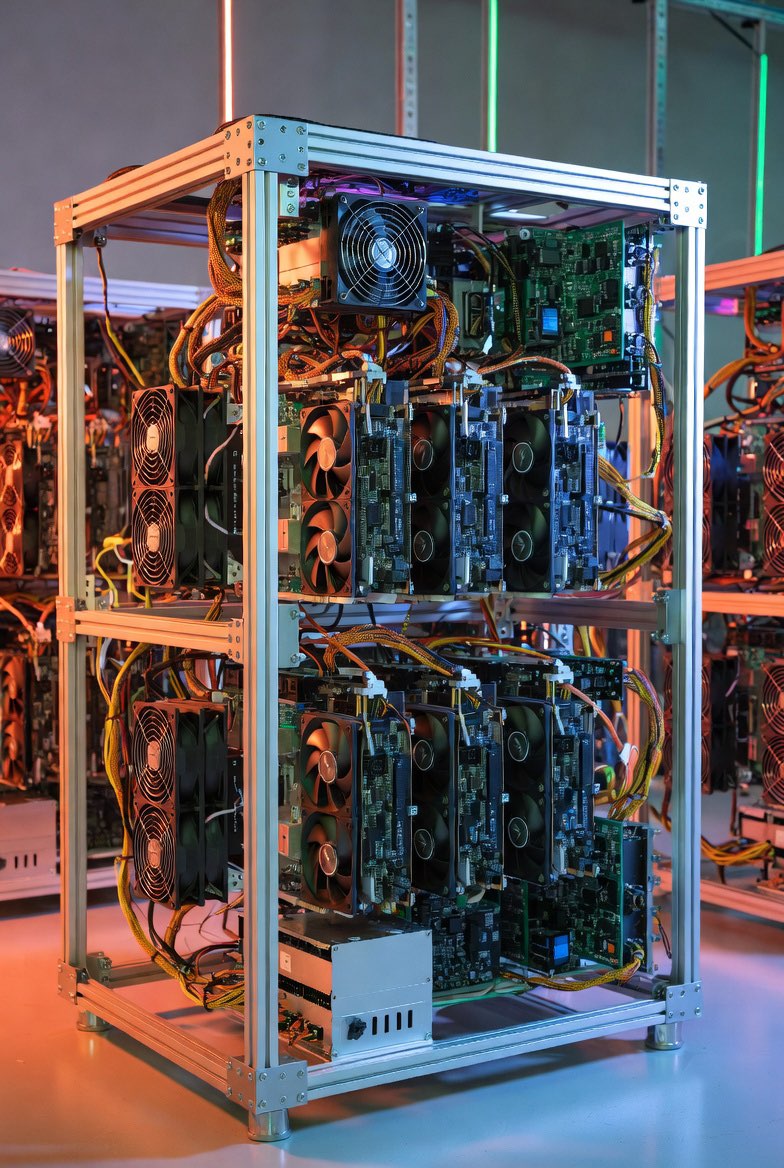 6 × RX 6600 XT 8GB · OPEN-AIR FRAME
About US$4,346 at HK$7.80 to the dollar. Volume pricing from three units. Price excludes delivery and any electrical work.
Per-card figures are measured after undervolting and tuning. "Wall power" already includes power-supply losses at 90 % efficiency and 45 W for the motherboard and the rest of the platform.
| Coin | Algorithm | Per card | V6 total | Card watts | Wall watts | Source |
|---|
Why Ravencoin is the default, and why Kaspa is not. This card is fastest at Kaspa on paper. That no longer matters: purpose-built ASIC machines took the Kaspa network over, and one of them does the work of roughly a hundred thousand of these cards. A graphics card there now earns effectively nothing, however well it is tuned. The same has happened to Alephium. Ravencoin and Ergo have kept ASICs out, so a card is still competing against other cards — which is why the default here is Ravencoin even though the card is slower at it. Watch the DAG file on Ravencoin: it grows, and 8 GB runs out around 2029.
In Hong Kong, heat is not a footnote. One V6 rejects about as much heat as a 500 W electric heater, all day. If the room has air conditioning running, you pay for that heat twice — once to make it and again to remove it. A typical air conditioner has a coefficient of performance around 3, so add roughly a third to your electricity figure for a cooled room. The "wall power" field in the calculator is where you adjust for that.
One V6 mining Ravencoin 24 hours a day at 658 W — about 16 units of electricity per day.
| Supply | Per unit | Per day | Per month | Per year |
|---|
Electricity only. Excludes cooling, hardware depreciation and pool fees. Tariffs are the published 2026 average net rates; if you are on a tiered domestic account your real marginal cost may be higher.
If you land in the right-hand column, we would rather tell you now than sell you a machine you resent in three months.
